
Adventure riding vs hard enduro in Romania: choosing the right experience
Choose a Romanian ride by terrain, pace and recent experience, rather than labels. Practical questions for adventure and hard-enduro riders.
Hard Adventure Tour ·
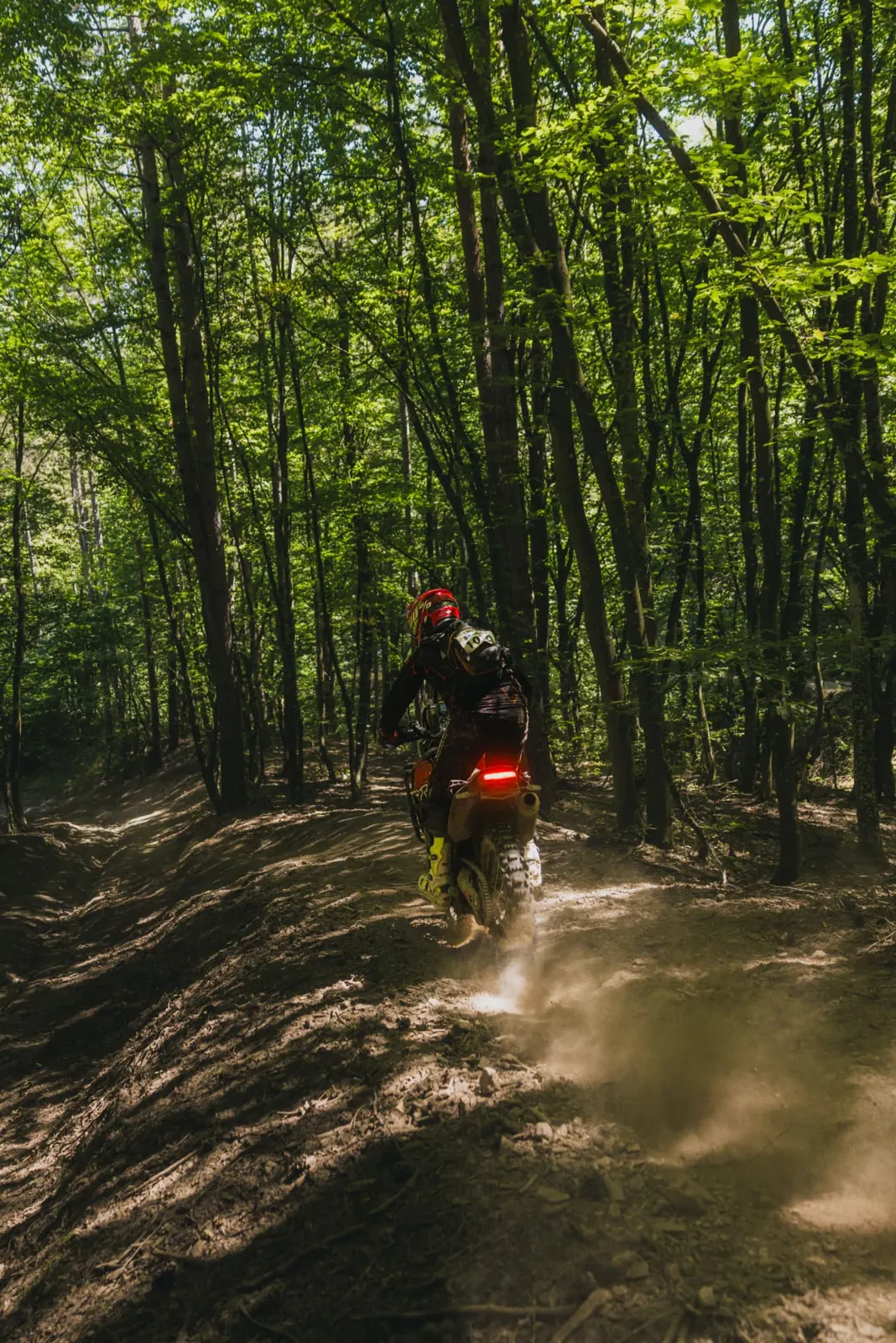
A motorcycle trip can be called “off-road” and still feel completely different from another off-road trip. The useful question is not which label sounds tougher. It is what kind of riding you want to spend your attention on, how much challenge you enjoy, and what you want to feel at the end of a day.
In broad terms, adventure riding tends to combine distance, changing scenery and a variety of surfaces. A day might include paved connections, gravel, easier tracks and stops to take in a place. Hard enduro, by contrast, puts the technical riding itself at the centre: tighter obstacles, steeper or rougher sections, repeated low-speed decisions and more physical effort. These are ends of a spectrum, not universal definitions. The same road can feel straightforward to one rider and demanding to another, depending on weather, motorcycle, experience and fatigue.
Start with your ideal day
Imagine the day you would happily repeat. Do you want to cover ground and see a broad landscape, with off-road riding as a satisfying part of the journey? Or do you want a concentrated technical challenge where negotiating the next section is the main event? Neither answer is more authentic. They describe different priorities.
Adventure-oriented riding may suit someone who values variety, a flowing rhythm and a mix of riding with breaks. It can still be tiring and unpredictable; “adventure” does not mean effortless or suitable for every level. Hard enduro may suit a rider who actively seeks demanding terrain and is comfortable managing slow-speed balance, traction, line choice and recovery. A willingness to try difficult riding is not the same as having the skills or stamina for it, so be honest about recent experience rather than relying on enthusiasm alone.
The Motorcycle Safety Foundation’s DirtBike School describes closed-range skill development and a separate introduction to trail riding. This supports a practical approach: build skills progressively and describe your current experience before choosing a challenge. Its US training guidance is general background, not a rating of Romanian trails. MSF DirtBike School
Think in terms of challenge and recovery
A sensible choice considers not only the hardest moment but also the hours around it. How comfortable are you riding while standing? How do you feel after a long day of concentration? Are you practiced at picking up or repositioning your motorcycle, if needed? Do you prefer a steady pace, or does problem-solving on technical ground energize you? These are planning prompts, not a test of worth.
Terrain descriptions are not guarantees. Conditions can change, and a route’s character depends on weather, surface and the day’s context. A responsible conversation about a ride should distinguish the intended style from a promise that every section will feel identical. If a description leaves you unsure, ask for examples of typical surfaces, daily rhythm, technical expectations, and how the plan can respond when a rider’s comfort differs from the group’s.
Match the motorcycle to the purpose
Motorcycle weight, seat height, controls, tyres and luggage can shape how difficult a section feels. A bike that is comfortable for distance may feel cumbersome in repeated tight turns; a lighter, more focused machine may be less relaxing for long connections. There is no universally best motorcycle. Fit and familiarity matter, and so does the route. Review the owner’s manual and equipment before riding; the MSF’s T-CLOCS checklist is a useful reminder to inspect tyres, controls, lights, oil, chassis and stands before a ride. MSF pre-ride inspection
Make your preference concrete
When discussing a trip, describe what you want more of and less of: distance or technical focus, relaxed flow or repeated obstacles, scenery stops or concentrated riding. Share your recent off-road experience, the motorcycles you have ridden, and what conditions make you cautious. That gives a planner more useful information than simply saying “intermediate” or “advanced.”
You do not have to choose a permanent identity. A mixed itinerary may be the right fit, or your preference may change as you ride. The key is to make the challenge intentional rather than discover a mismatch after the day is underway. Start shaping the kind of experience you want through Build Your Ride, or raise a specific question via Contact.