
Planning a Romanian riding trip for a group with mixed abilities
How to describe rider experience, agree a shared pace and discuss regrouping and alternatives without pressuring anyone to ride beyond their comfort.
Hard Adventure Tour ·
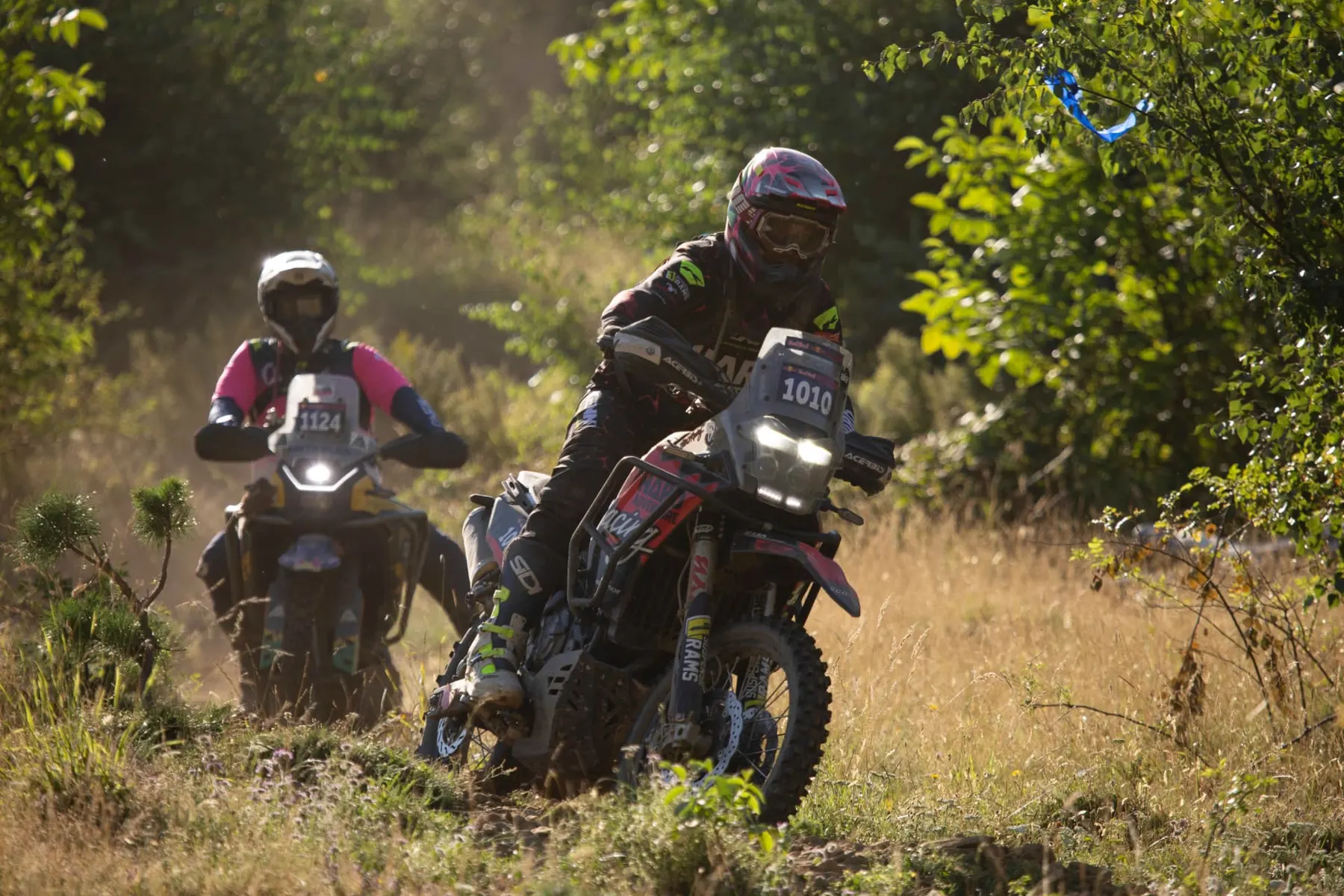
A group trip can include riders with different experience, confidence and preferred pace. That need not make the ride less rewarding. It does mean the plan should be designed around honest communication, manageable groups and clear ways to regroup—not an assumption that everyone will ride at the same speed.
The first useful conversation happens before the trip. Ask each rider what they have recently ridden, on which surfaces, and what kind of day they enjoy. “Intermediate” can mean very different things to different people. Specific examples are more helpful: how much off-road riding have you done recently? Are you comfortable on loose surfaces? What happens to your confidence when tired? What would make you choose an easier option? These questions are not a ranking exercise. They help the group plan a day that riders can enjoy.
Agree on a shared purpose
Decide whether the day prioritises distance, scenery, technical challenge, or a mix. If one rider wants a flowing route and another wants sustained technical obstacles, a single pace plan may not satisfy both. Consider whether the itinerary can include alternatives or separate sections, with a clear meeting point and realistic timing. Do not promise that a split is possible unless the route and support arrangements have actually been checked.
A plan should also state how a rider can opt for a less demanding alternative without embarrassment. Make it normal to speak up early—before fatigue or pressure turns a manageable concern into a difficult moment. The group’s aim is not to prove who is strongest; it is to create a day whose challenge is appropriate for the people present.
Keep the group organised
The Motorcycle Safety Foundation recommends a riders’ meeting to discuss route, stops and signals, and assigning experienced lead and sweep riders. It advises manageable group size, with smaller subgroups where needed, and says the leader should know riders’ skill levels and monitor the group. Its guide describes staggered formation as a way to preserve space on suitable roads, while single file and greater following distance are preferable in curves, poor visibility, poor surfaces and other situations needing more manoeuvring room. Conditions and local rules matter; these are general safety principles, not a substitute for judgement. MSF Guide to Group Riding
Before setting off, agree on signals, what to do if the group separates, where regrouping happens, and who checks that everyone has arrived. Do not let riders feel they must chase to catch up. A regroup point is only useful if the route to it is clear and the group knows what to do if someone stops or turns back. Phone coverage, remoteness and available assistance vary; make a plan that does not depend on unverified assumptions.
Design the pace around the slowest section
A route that looks short on a map may demand much more time when it includes unfamiliar surfaces, navigation, breaks or a technical section. Set a pace that leaves room for those differences. Use breaks to check comfort, hydration, concentration and equipment—not only the clock. If the group is becoming stretched, pause and reassess rather than encouraging anyone to ride beyond their comfort level.
Riders can also differ in how they handle the same motorcycle or load. Keep luggage practical, and avoid adding avoidable pressure such as a late start or an overfull schedule. Before riding, inspect the motorcycle and protective gear. MSF's DirtBike School describes basic skill development, risk management and progression to trail riding. It is general training context, not a local route guarantee. MSF DirtBike School
Make the plan adaptable
A good plan includes decision points. At each, the group can continue, take an easier option, shorten the day or stop. Agree in advance that changing the plan is a competent choice, not a failure. Weather, surface and fatigue can alter the experience; route descriptions cannot guarantee identical conditions every day.
For a custom ride, share the group’s spread of experience, the kind of terrain different riders prefer, and any concerns about pace. Ask how the proposed itinerary handles regrouping and alternatives. Those specifics are more useful than simply reporting the number of riders.
Begin a trip outline through Build Your Ride, or use Contact to discuss a group’s different needs.